Showing posts with label small press. Show all posts

Wednesday, December 17, 2008

Broad Street by Christine Weiser

I couldn't get into Broad Street and gave up by page 50. Here's why:
  1. I can't relate to the character or her motives for starting a band, and she deals (or, rather, doesn't deal) with her ex in a decisively passive-aggressive way that bugs the heck out of me.
  2. I generally don't care about bands, punk or otherwise. This one does nothing to make me interested.
  3. Weiser's writing style could use some polishing. She relies on dialogue to move her plot her descriptive skills are lacking--she tells instead of shows.

Tuesday, December 09, 2008

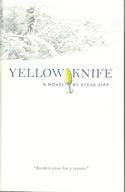
Yellowknife by Steve Zipp

Stumble into Canada’s Northwest Territories with one of the many characters readers will get acquainted with in this strange tale. Meet a handful of biologists who are being chased out of their government offices and their jobs, a mosquito fanatic, three generations of First Nations (in the States, we'd call them Native Americans or Indians), a bureaucrat, a fisherwoman, a couple of con men and a dog of indeterminate age and genesis. Too long a list to name each one by name (or profession), readers may need a program to tell the players apart as Steve Zip unwinds his postmodern tale. Robert Service it ain’t, but the Northwest Territories is not the Yukon and Zip who still calls Yellowknife home, reminds us several times that the two are not synonymous.

Another reviewer, at Geranium Cat's Bookshelf, says in a lovely, succinct way, "This is not so much a book to read as to inhabit. You take up residence with a motley crew of characters and watch as their lives happen around you." She's right. I wouldn't recommend trying to read this book in short spurts--I kept getting distracted and it took me three times as long to finish it as it probably would have if I'd settled in for a few long afternoons of reading.

Part of this may be due to its postmodernity. I'm not a fan of postmodern books, but this wasn't as confusing as some I've read. A parody of stereotypes (or maybe a parody of real people Zipp knows) parades through the stories that amalgamate to form the book, reappearing where you least expect them and creating a distinctly surreal series of experiences--especially when the animals start talking.

Yellowknife is not an unpleasant read, but I think it helped to have my husband nearby when I wanted to ask questions like how cold it gets there or what it's like to drive on an ice road. He's also the one who pointed out the parody aspect of the book; I had been taking it way too literally and having an exasperating time with it until that point.


Many thanks to Steve Zipp for sending me a copy of his book, even though I don't participate in challenges (even the Canadian Reading challenge).

Thursday, October 23, 2008

Northlander by Meg Burden

Hi, everyone. Jill at The Well-Read Child sent me a few books to review as a guest blogger for her site, and the first one is Northlander.

My review is scheduled to be posted at The Well-Read Child today!


By the bye, in two months I will be turning 31. I'm just sayin'.

Saturday, October 20, 2007

The Nature of Monsters by Clare Clark

Though the characters tend to be inconsistent, especially at the end, and not particularly likable, the plot is interesting because it's clearly so well researched. Men (one in particular) interested in medicine and general scholarly endeavors, heedless of the grief and havoc their actions bring about, use household maids to experiment with what causes birth defects in children. Mr. Black, the apothecary, is determined (through his opiated haze) to prove that the highly sensitive nature of women can cause their fears to imprint on the form of their unborn by experimenting on his maids Mary and Eliza, the narrator.

Long story short: This is a book for people who love the history behind historical novels.

Sunday, October 07, 2007

If You Want to Write by Brenda Ueland

I've read quite a few books about writing, and I can't say that I like this particular book. However, I can't say that I don't recommend it; it had its moments of brilliance (usually involving quoting someone else), and some of what I didn't like about it probably needs to be attributed to the writing styles of the era (first published in 1938).

Just to get it over with, what I didn't like was how the book felt condescending, mostly based on the number of I-want-to-tell-you's and the I-am-trying-to-get-you-to's. In one chapter, she uses another writer's article and parenthetically inserts her comments; I would have preferred to make my own opinions before reading hers. And she refers to what she calls "Truthfulness"--Truth with a capital T scares me because it implies a singular truth, which is not something that we humans are privy to (much as some of us would like tho think otherwise). Attributing this capitalization feature to the era of the writing though, she could have had a very interesting conversation with Tim O'Brien about capturing truth through writing.

Also, Ueland seems to subscribe to the belief that anyone can be a writer--she would have made a fantastic middle school English teacher, I imagine--and though I don't agree (there are plenty of books published that should have ended up in the editors' pitch piles), I think it is important to encourage students who might otherwise never even try (really try) to write a good story and so I would recommend this book to any keepers of libraries and middle/high school English teachers.

All in all, I don't think that there's much she advises that books about writing haven't been advising ever since. Keep it simple, don't try to force your voice, etc. Ueland's gems, I think, lie in quoting Van Gogh (on page 20) regarding the capturing of moments and Chekhov (on page 126) regarding characterization through dialogue and the personality and voice of the writer. Also, there is a paragraph (on page 86) in which she describes beautiful writing: "It is impossible to cut it. I try to take out a sentence here or there, but cannot bring myself to do it. They are all too good and necessary and contribute too much."

Friday, September 14, 2007

Thank You for Not Reading by Dubravka Ugresic

In Thank You for Not Reading Dubravka Ugresic presents a collection of insightful, cutting essays about writers, readers, exile, form, and the state of the publishing world. She discusses agents and the role of the book proposal, foreign writers (she's Croatian), good writing, bad writing, and the concept of literature (just to name a few).

I found myself laughing out loud (often in inappropriate settings) at her observations about characters and writers, gender and location, successful novels as gossip. The copy I read (from the library--but I may have to buy my own) is tabbed as though I could do something with her ideas, as though she could support a paper I have yet to write. (I do wish I had read this book before/during grad school.) Mostly it's memorable language or analogies I've marked, but there are too many--I'll never write them all down, and so all my tabbing has been for naught. The book's already overdue.

I recommend that you don't sit down to read this cover to cover. Read a few essays and let them settle before going on to the next few. Maybe read a novel as you're making your way through Thank You for Not Reading. I started losing focus with the last essays, probably the result of having read nothing else for weeks and the more academic style (and length), but I do highly recommend this book to anyone who loves reading and/or is especially interested in the publishing field. I'll be buying my own copy, and I'll return this one to the library now.

Tuesday, July 03, 2007

Summit Avenue by Mary Sharratt

How can you not want to read a book that begins, "How can you weave a life from fairy tales?" I encountered this book while looking at small press websites. I don't even think I read the rest of the summary blurb until I was actually a few chapters into it.

The protagonist is Kathrin Albrecht, a young woman who emigrates from pre-World War I Germany to find a better life in America. She begins her life there as a flour mill worker, learns English, and then finds herself in the good graces of Violet Waverly, a widow who is working on a project and needs a German translator.

I enjoyed the way the fairy tales are woven within Kathrin's story and that the similarities she sees aren't necessarily the parallels the reader sees. I also enjoyed the framing of the story, so that you have a sense of where the story will end--or where you think it will end.

The only slides in my enjoyment of this book were in little moments that I didn't find to be consistent with Kathrin's voice or traditions of the period. There were just a couple paragraphs--one about pre-legal abortion methods that really felt like a rushed mini history lesson (or like it was an interesting bit of information that Sharratt intensely felt needed to be integrated somehow) and the other was regarding wedding rings. (Double ring ceremonies were not common until World War II and as they were both children of European parents, I am doubtful that either of their fathers would have worn wedding bands.)

But those were just a few paragraphs, and the rest of the book was easy to fall into. People will call this book unconventional, but only because the relationship between Kathrin and Violet becomes Sapphic. Like all fairy tales, this is a story of maturation, fear, and love--and it's well worth your attention.