Sunday, March 01, 2009

Unforgettable: Matilda by Roald Dahl


I read Matilda when I was in sixth grade. I think I bought it at a book fair.

I tucked into it that night, and when I finished it the next day, I gave it to my sister (two years younger) to read. We both read it more than once. A few years later, my other sister read it for class. As she had some trouble reading, Mom often helped by reading aloud to her, and I remember when K. was reading Matilda, we took a road trip, and we all got to enjoy Mom reading Matilda out loud (I would've been 15 by then).

It takes a major talent to write books that are laugh-out-loud funny every chapter, and to make books funny for both kids and any adults who might be reading with them takes much more.

When was the last time you experienced the Trunchbull in all her horridness, with her pokey and her riding crop? Do you remember how much different the book is from the movie? Do you remember how the book ends, as opposed to how the movie ends?

And if you haven't read it, what are you waiting for? Consider this an invitation to revel with me in fits of childish giggles as Matilda befuddles the grown-ups in her life.

Saturday, February 28, 2009

Weebeasts: Plight & Weebeastology by Micah Linton

I'm not usually one to review picture books for kids, but when Micah Linton asked if I'd be interested in reviewing Plight, the second book in his Weebeasts series, I had to say yes. If his books imitated the free spirit of the website, I was sure I'd enjoy them.

I wasn't disappointed. This is a beautiful book.

The story itself is simple--the Weebeasts have been bullying (and enslaving) their neighbors, and when their neighbors fight back, the Weebeasts are driven out and forced to search for another home. Along the way, they learn to engineer things and to be more self-sufficient, and just as important, they don't give up their search. In the end, they meet another creature whose help they have to take to find a home, which I assume isn't something they would have done in their old home.

At first, I wished for an individual to follow through the story, rather than following a whole group, but I realized that's something I look for as an adult; it wouldn't have bothered me as a kid not to have one main character. The quest of the group is more important than any one character.

The day after
Plight arrived, I received another box--this one containing Weebeastology and a Weebeast toy.* Weebeastology contains illustrations of Weebeasts and their adventures, some from the books and some not.** I'm undecided as to whether I prefer the wordless books or the book with a story; I like the idea of making up your own story to go with Linton's illustrations.

My husband suggested I send Weebeasts to my sister and niece to enjoy, but I like the idea of having it to read to our own kids someday, so I'm going to hold onto them. And if we do have those kids, I'll be looking for the rest of the Weebeasts series to add to the kids' book collection.
At the moment, Linton has planned seven books, but may have more. Since the Weebeasts' history parallels much of humanity's, Linton says, "it will be fun to explore new paths" for their stories, and he suggests that one story will reveal how Weebeasts "evolve into elves of folklore." (
I'm really looking forward to that one.)


*You can see pictures at Reading Rumpus, who received the same package--and is giving hers away.

**Unfortunately, some of the artwork in
Weebeastology gets lost in the crease.


Many thanks to Micah Linton for sending me this wonderful set.

Friday, February 27, 2009

Complexity of Night Writing Challenge Update (February)

I'm at a mere 1300 words this month--the end of the month crept up on me. Again. And again, I wrote a couple of character sketches. The first was about a dancer who had been scarred in a car crash and after plastic surgery, she no longer looks like herself. The second is a little stranger. At first, it was about a young woman who's gotten a little lost in life, but now it seems that this is really more about her mother than her.

After the Fire by Robin Gaby Fisher

After the Fire is the recovery story of two college boys who were badly burned in a dormitory fire January 19, 2000.

This book must have been complicated and difficult to write, considering the subject matter, but I feel that the author tried to simplify it for her readers, which resulted in a book that read like a very long Reader's Digest story, reinforcing every positive angle (the unfalteringness of the parents' faith, burn ward staff dedication, the boys' determination, etc.) in every chapter.

Personally, I was expecting something more complex. The people portrayed in this book had very minor flaws, if any, and nearly all negativity was filtered out, which made it seem a bit less true.

So, if you like--or at least don't mind--Reader's Digest-style stories, this might be right up your alley.

Thursday, February 26, 2009

College Girl by Patricia Weitz

Here's the premise of College Girl: Natalie is a college senior majoring in Russian history. She supposes she's fairly attractive. She's never had a boyfriend and is more than a little obsessed with the fact that she's a virgin. She feels like the only 20-year-old on campus who still is.

There you go. That's about it. You can probably guess what happens, but just to be clear: She hooks up with this cute guy who seems to be into her. At first. And she completely loses track of her sense of self. Not that she has much sense of self, outside of her awareness of being perceived as a studious introvert--when she thinks she's perceived at all.

I felt I should've been able to connect more with Natalie's character--my 20-year-old self and Natalie had quite a bit in common on the surface--but from the beginning, she was a character I didn't especially feel sympathy for or empathize with. Her perception of what her college experience should be is nothing I recognized of my own 20-year-old self's expectations. (In college, I never smoked anything and never got soused, and I was never especially tempted to.)

In the end, though, it comes down to this: Natalie has no confidence and does too much navel-gazing, mistaking it for reflection. The extent of her navel-gazing gets in the way of other characters' development, which results in mostly static characters throughout.

And then there's the issue of plot. There's only one. Potential sub-plots were quashed as the book progressed, and it all boiled down to the cute guy and sex, no matter how detrimental the relationship became. (The lack of plot did make this book a very quick read.)

Natalie reminds me a little bit of Bee at the end of The Sisterhood of the Traveling Pants, after Bee has slept with the college-bound soccer guy and becomes a lost shell of a person and spends the whole second book trying to reclaim her self.

I appreciate what I think Weitz tried to create, but in the end the story comes up short. I'm sorry to say that I can't recommend this book; there are far better books to spend your time with. (Of which The Sisterhood of the Traveling Pants is just one.)

Sunday, February 22, 2009

books with sticking power

So you know how you can really like a book but three years later you can barely remember even the basic plot, let alone details? And then you know how there are some books that you find yourself thinking of, years later, when you're on the bus or driving to work or waiting in line at the grocery store?

I've been looking at the books on my shelves & considering which books I've read and how much I remember of them. I've also been regretting the decision to leave some books in their boxes back in Ohio till I can get back to reclaim them. I thought I'd share some of the books that fall into the latter category as they come to me, and though I'd planned to just post a list of ten or so titles, I want to write about more than that. Conveniently, this will also allow me to post more often than reviewing my current reads alone. (I don't seem to read nearly as quickly as I used to. Maybe the internet is destroying my attention span.)

Saturday, February 14, 2009

Rocksalt: An Anthology of Contemporary BC Poetry


I think Rock Salt may be the best poetry anthology I’ve read (and having been an English teacher, I’ve read a few).

My Rock Salt is all tabbed with various Post-It flags, most of them to bring me back to poems that I want to revisit, either because I liked them or I wasn’t sure if I liked them. I also tabbed quite a few of the poets’ statements, which can be pretty dry (why I became a poet, yada yada yada), but then there are a few gems that make reading the statements worthwhile. To name one, Ed Varney’s poet’s statement is a list of what poetry is not (“Poetry is not song, no rhymes, not versification, not poesy, not linguistic gymnastics, not language cleansed and purified, not a lyrical expression of what’s bothering you...”). I also found Eve Joseph's first : “Poetry is smarter than I am; it knows things before I do and pays attention where I am oblivious.” (I feel that way about writing in general, but it makes particular sense with poetry.)

My least favorite poems tend to be political poems, because they often feel petty and ignorant. I barely glanced at one poem because the poet’s statement said, “Because the US—and US capitalism—are presently the dominant, brutal, imperialist forces most perverting Canadian democracy, justice, freedom and love of the Good, I must write about US Capitalist Imperialism,” and that rankled me all the way to my (oh-so-American) toenails because that declaration seemed so thoughtless and media-fed, and though I’m sure he was certain that his statement looked educated and bold, I couldn’t take his perspectives about anything seriously after that.

I prefer narrative poetry, poetry full of imagery, and I enjoy poetry that sits prettily on a page (even if I don’t understand it)—poetry that sticks with me, like “Avatar” by Iain Higgins, with lines like, “… He spoke / his love in a language of consonants like fishbones / in a slit throat…” and from “The Unremembered” by Peter Levitt, “There is no way to put it back together, / there is nothing to put, no back, / and together is a close approximation, / a flash of what only seemed.”

“Fixer-Uppers” by Sean Horlor is a delightful poem about relationships (presumably failed) that starts:

They all said there’s something you should know
About me they all asked why
Haven’t I met someone like you
Before they all said yes they all said please

The lines continue to run into each other, blurring and becoming more dizzying, both humorous and a little pathetic in regards to how it portrays relationships.

There are so many more I want to share, but instead I can only recommend that you seek it out yourself. I am very glad to have this poetry anthology on my shelves.


The cover painting is "The Poet and The Musicians" by Diana Dean, a Salt Spring artist, oil on canvas.
Many thanks to those at Mother Tongue Press for sending me a review copy.

Shift by Charlotte Agell

Adrian lives in a society ruled by religious zealots, and they insist the apocalypse will be any day now. Could they be right? Check out my review of at Shift The Well-Read Child!

Friday, February 06, 2009

Romantic quotes (I'm giving in to sappy sentimentality)

I am a sucker for romance (not the bodice-ripping kind), so when I saw the bookworm's post inviting people to play along, I just had to.*

Naida specifically asks for movie quotes, but I'm going to throw in a favorite book quote, too. And a TV show quote. And some of them don't have much to do with romance in context, but out of context...

Still sometimes, when the air is warm or the crickets sing, I dream of a love that even time would lie down and be still for.
(Practical Magic, the film--I didn't see this in the book, and I was looking for it. Did I miss it?)


It is the broken heart that makes us human in the end.
(Iona Moon by Melanie Rae Thon)


You should be kissed, and often, and by someone who knows how.
(
Gone with the Wind. I have this one I have in common with Naida.)


There are too many mediocre things in life to deal with and love shouldn't be one of them.
(Dream for an Insomniac)

Anything less than mad, passionate, extraordinary love is a waste of your time.
(also Dream for an Insomniac)


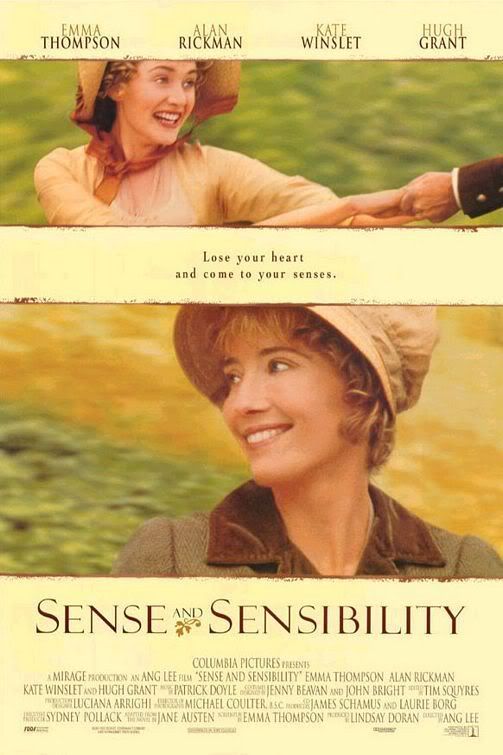
Pathetic? To die for love? How can you say so? What could be more glorious?
(Sense & Sensibility)


This thing that we call a wedding ceremony is really the final scene of the fairy tale. They never tell you what happens after. They never tell you that Cinderella drove the Prince crazy with her obsessive need to clean the castle, cause she missed her day job, right?
(
The Mirror Has Two Faces)


Death cannot stop true love. All it can do is delay it for a while.
(
The Princess Bride)


There are no happy endings because nothing ever ends.
(The Last Unicorn. This one also isn't in the book.)


I even hate this letter because it's not the whole truth. Because the whole truth is so much more than a letter can even say. If you want to hate me, go ahead. If you want to burn this letter, do it. You could burn the whole world down; you could tell me to go to hell. I'd go, if you wanted me to. And I'd send you a letter from there. (My So-Called Life)

Anna: It feels like how being in love should be. Floating through a dark blue sky.
William: With a goat playing the violin.
Anna: Yes - happiness isn't happiness without a violin-playing goat.
(Notting Hill)


*When I was a teacher, I used to put all these quotes from books and movies and other famous people all over the wall for Valentine's Day. My students loved it because they could get up and walk around the room reading them, and there were so many! It took me 3 to 5 hours to put them all up, and I always did it in one evening. Unfortunately, those quotes are in a file in Ohio yet; I thought about giving them to another teacher I know, but I couldn't part with them--I'd been adding to the collection since I was a student teacher.

Thursday, February 05, 2009

My niece Ella

Head over to my sister's family blog to see a little video of my four-month-old niece reading with her mom. Ella takes charge by turning the pages.

*Sigh* They're sitting in the green recliner that used to be mine. I miss that chair. So comfy. (I just couldn't justify trying to bring it to Canada with me. And it's not like we have room for it now--just wait till you see my reading/blogging space.)

Monday, February 02, 2009

The Book of Vice by Peter Sagal

When I was in college, a friend found out that I'd never seen a porno, and I was promptly invited to her porno party--which she'd been convinced to throw because she'd never seen one, either. I went, and I wrote about the experience (which I won't describe here) for my weekly column in the college paper.

Then, when I was in grad school, a stranger at the local Barnes & Noble Starbucks struck up a conversation with me that somehow ended in an invitation to a fetish ball. (It wasn't a date invitation, just a suggestion that he'd be ever so happy to run into me there.) I obsessed about that invitation for a week; I was extremely curious as to what a fetish party would be like. In the end, I decided that such an experience likely wouldn't be worth the discomfort of being so far outside my comfort zone--and I couldn't think of anyone to go with me who I'd trust in that kind of situation, anyway.

The Book of Vice explores both porn and fetishes as human vices. Peter Sagal wasn't so quite so shy. He went to a fetish club and a porn set to research for this book. The other vices he explores--consumption, food, gambling, swinging, lying & strip clubs--are also personally explored by visiting a swingers' club (with his wife, but strictly as observers), interviewing strippers, spending nearly $1000 on a food experience, and visiting Vegas and talking to professional gamblers.

Alcohol, smoking and drugs were not discussed because Sagal felt there was an element of addiction that overrode their vice qualities. Funny, I thought porn and gambling were addictive, too. I guess drawing the line between physical and psychological dependencies.

Sagal uses a combinationof expository and narrative in each chapter, which generally worked very well with his conversational style. He does have a tendency to drag every now and then--I was tired of gambling, strip clubs and porn about halfway through those chapters, even though the second halves were always as equally interesting as the first.

My favorite chapter was the one on eating--the descriptions were fun, though it quashed any desire to experience a 26-course $1000 "meal" that involved inhaling shrimp cocktail through an atomizer or eating little frozen pureed vegetable cubes. (In the end, all Sagal and his wife Beth really wanted was something satisfying--like a fast food burger.)

I wonder how a woman writing this book would have changed it. Would she have reached different conclusions about why some men are drawn to strip clubs? Would she have even covered the same vices? Would she have explored why there are so many sexual vices? (About half of the vices in this book are sexual.)

I can't say I would highly recommend this book. It's just a little too slow, a little too purposeless to be highly recommended. (But I would like to see that ghostwritten memoir he mentions in the porn chapter rewritten and published as a fictional memoir.) This will probably hold the most interest for people who really liked their pop culture, or maybe sociology, classes in college.


Thanks to Jennifer at The Literate Housewife Review for sending me this book!

Saturday, January 31, 2009

Complexity of Night Writing Challenge Update

I used to be a better writer. I used to write all the time. And then I got out of practice and--well, I'm out of practice.

I don't really want to publish what I ended up writing this month-- 650-word scene of a woman coming home to an empty apartment and a 750-word blob of writing that started out as a character sketch and morphed into some huge, random, wandering outline of part of the character's life. No character traits, just events.

I also wrote some smaller character sketches in my Moleskine, but I haven't typed them up or counted the words. Still, even without those little bits, I met the 1000-word goal for the month. Yay!

My personal challenge this year: write a long piece of fiction without losing my characters. (I always mismanage them--they all seem to morph into generic, one-size-fits-all characters.)

Monday, January 19, 2009

When Will There Be Good News? by Kate Atkinson

I think this title seems more like a nonfiction title about politics or the economy than a novel, and the cover--eh. Unprovoking. Unindicative. And because this will come up later, it's worth noting that this is a Jackson Brodie thriller--one of a series. Would you guess that by looking at the cover?

When Will There Be Good News?
is, though, definitely an apropos question for this book. The first chapter ends with murder most foul. Though the description of the murder is artful, impressive and promising, this sets readers up for disappointment in the rest of the book, which doesn't follow through. And everything just keeps getting worse. Accidental deaths. Cruel siblings. A train wreck. Psychotic killers running loose.

It sounds like page-turning goodness, right? And it mostly is, except that every chapter shifts perspective. Sometimes that works. In this book, some of the characters took too long to get tied in to the rest of the plot, and because of the perspective shifts, they took too long to get to know. (As the NY Times review says, it "at times derail[s] the narrative momentum.")

The main characters:
  • Dr. Joanna Hunter, the woman who was the girl who survived the first chapter
  • Reggie, a 16-year-old orphan who takes care of the Hunters' baby boy
  • Louise, a detective obsessed with Dr. Hunter's ability to overcome tragedy and another woman's inability to do the same and who is also desperately insecure in her abilities to be anything other than a cop
  • Jackson Brodie, a former cop who accidentally ends up in Scotland just in time to be part of the action
Louise, who may be the most active of the characters--in a movie version, she'd probably get the most screen time--was also the least impressive. I wouldn't want to spend time in a room with her, though she seems well-liked within the book. Louise makes random eco-aware statements that makes me think Atkinson was determined to keep every single trait she'd devised for Louise*

Reggie was perhaps the most organic, most genuine of the characters--and she was funny. I was disappointed to reach the end of the Reggie chapters because it meant moving on to one of the others. Joanna would have been forgettable if she weren't such a necessary part of the plot. Ironically, Jackson Brodie's part seemed contrived and superfluous.

When Will There Be Good News? begins with promise and doesn't quite follow through, though readers will find themselves determined to find out what happens despite.


* I found Louise's random eco-aware comments very hard to swallow, as well as against the grain of the rest of her character.

Thanks to Little, Brown & Co. for this review copy.

Saturday, January 10, 2009

A momentous occasion...

I have decided to participate in a challenge. Not a reading challenge, but the Random Complexity Writing Challenge. I keep meaning to write more, so maybe this will help get me back into my better writing habits. And it's completely doable--1,000 words/month.


Aerin
at In Search of Giants is hosting a writer’s challenge to foster inspiration and community. It's pretty low-pressure: 1000 words a month. At the end of the year, you'll have a total of 12,000 words, which is not even half a NaNo entry. Go here to sign up!

Thursday, January 08, 2009

Tuesday, January 06, 2009

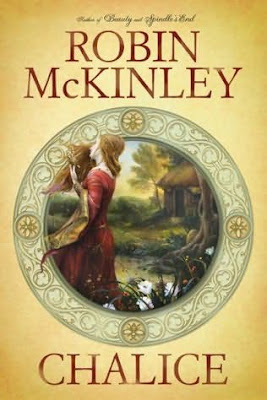
Chalice by Robin McKinley

I was a little worried that I'd be disappointed in Chalice, probably because McKinley has written so many books I've enjoyed that I don't want to encounter one I'm not tickled with. And though I'm not crazy about the title, I needn't have worried.

The language of Chalice is very similar to the language of Deerskin (possibly my favorite book ever)--which is to say that McKinley's style is composed of a comforting, repetitive storytellingness that I love.

Chalice the position Mirasol holds the Willowlands. She wasn't trained for the position but she should have been. The Chalice's duty, using elemental understanding and magic, is to keep her land (and people) from destroying itself. Apart from trying to hold her demesne together (and barely being able to do that), she is also trying to help the new Master to keep his position; the Overlord seems determined to be rid of him, no matter what chaotic harm that would bring to the lands and people, and Mirasol's future will be determined by the success or failure of the Overlord's scheme.

Chalice is a wonderful story with a strong (if shy and uncertain) woman in the leading role. I'd highly recommend it to any teen (or tween) girl who enjoys fairy tales and fantasy. Or adults, for that matter.


Thanks to Lenore at Presenting Lenore and Penguin for this book!

Saturday, January 03, 2009

Practical Magic by Alice Hoffman

I confess, I love the movie version of Practical Magic. If I'd read the book prior to seeing the movie, though, I think I would have been very disappointed with the screenplay adapters.

Much like as with Under the Tuscan Sun, the movie and the book versions of Practical Magic seem to have very little in common, except for the characters' names. But as I read, I kept thinking about the movie, and every time a scene from the book that also made it into the movie came up, I imagined a roomful of screenwriters sitting around and saying, "Yeah, but in the movie Sally doesn't have to do that," and, "The girls don't need to be that old in the movie." In fact, the movie writers seem to have merely borrowed generously from the book, which has a lot more substance to it than the movie was ever planned to.

It's rather difficult to review the book, tied in my head as it was to the movie. I can say that I found myself thinking, when I was nearly through the story, that the writing style--which included a lot of future talk ("they would never [do that] again" and "future generations would...")--normally would have gotten old for me very quickly, but in this book it worked. Still, I feel like I need to read this again in a few weeks or months, when I'll quit looking for much of what happened in the movie to happen in the book, and be able to fall into it a little deeper. (For example, and only because I think you should be forewarned before you read this if you've already seen the movie but haven't read the book: there's no ghostly possession in the book, no Owens curse, no Sally opening her own store, and nor is there a midnight margarita party scene.)

I'll probably re-report on this book when I've re-read it. Until then, highly recommended for people who like fairy tales and love.

Many thanks to my sister, who sent me this book for Christmas.

Saturday, December 27, 2008

Ikonica: A Field Guide to Canada's Brandscape by Jeannette Hanna & Alan Middleton

For this book, my readers are getting three reviews: mine (an American's view), my husband's and a knowledgeable and wise friend's (both Canadian)--not necessarily in that order.
____________________________________
Knowledgeable & Wise Friend:
The companies profiled are well known to Canadian consumers. Products, logos and signature lines, etched in our everyday lives. But this book adds little to our knowledge and understanding of the dramatic creation and development of these enterprises or the backgrounds of the risk-takers, visionaries and adventurers who dreamed the impossible dream in a country not known for taking chances. Instead we get button-down profiles right out of the annual reports and faint images and pale ghosts of the greatness of capitalism and free enterprise.
No energy, no excitement and few insights to celebrate these iconic companies - ironic.
iKonica/ironiKa

Muse:
I wanted to read Ikonica because it looked fun and educational for this American living in Canada. Part coffee table book, part Canadian marketing overview, Ikonica was not as fun as I thought it would be. I learned some stuff--there are a few brands/companies I didn't know were Canadian (like Umbra, the company that designed the liquid soap dispenser I bought in NYC). Mostly, though, Ikonica is a book that boils down to a pat-yourselves-on-the-back book for Canadian companies (which seems to have been the purpose of Hanna and Middleton). Readers, whether they are Canadian or not, will quickly tire of of "Canadians are so great" statements that appear at least three times a page.

I also disliked the comparisons between American marketing and Canadian marketing (though I don't know if it's avoidable); I detected definite anti-American sentiments from some of the contributers, and even when they weren't referring to the myopia of American consumers, the CEOs and presidents and VP's and founders all made a point of discussing how "modest" Canadians are.

Overall, the book lacked substance. No one discussed anything that had ever been done wrong or badly in their companies, with the exception of the marketing VP for Cirque du Soleil mentioning that they tanked in Niagara Falls because of ill planned marketing and branding.

Ikonica reaches the height of boring readers by the halfway point (sooner for the less tolerant) if you read it straight through, after which readers will have a hard time focusing and may just flip through the pages to look at the pictures.

Muse's beloved husband:
Ikonica goes to great lengths to re-broadcast the corporate "message" as written by those pretending to be the messenger, the CEO's and Chairmen/women of the boards.

To read this book and believe the words contained, I would come away thinking that if it weren't for George Stroumboulopoulos, I would have no cultural bellwether with which to guide myself.[Insert finger in mouth here to imitate gag] If it were not for Roots, my understanding of the beaver would be lost forever. [Puff out cheeks here to imitate mouth filling from reflux and gag reaction] I do not watch The Hour, by choice. I have never worn Roots clothing, by choice.

Where is mention of Take Thirty and the ground breaking work of Moses Znaimer? Where is the nod to the many industrial innovations of Canada? Jeepers and golly gee there hasn't been a true-sounding Canadian tone since the death of Peter Gzowski. (At least he admitted to being a bit of a fraud with his "creation" of the award-winning front cover of the burning tree burning the forest fire sign.)

Little is said in Ikonica about the failures, and the struggle... the ashes and anvil where success is forged. Ikonica comes in at last place in selections of books I would choose to offer as representative of Canadian anything. Ikonica reminds me of early family portraits, stood for at the dawn of photography; Mother and Father, straight-faced and turned out in clothes more suited to a funeral parlour; children looking equally dour, standing poised and upright. It becomes known later that each person had a stiff set of metal fingers gripping them by the neck to ensure steady pose and lack of movement. That is Ikonica.

High quality production in print and photography amount to little more than an advertisement from the writers of this book that they will produce for your company, a very slick press release, which you can write yourself.

I will stick to Why I Hate Canadians by Will Ferguson as a gift to the interested.
__________________________

Thanks to Mini Book Expo: Business Edition & Douglas & McIntyre for sending this book.

Tuesday, December 23, 2008

Click by Bill Tancer

This is another guest post by my beloved husband. I will probably be reviewing it myself sometime in the near future.
--<>--

http://www.hyperionbooks.com/author_video.asp?ISBN=1401323049 will take you to a website showing a video of Bill Tancer talking to the Google demagogues about his new book Click.

http://www.hyperionbooks.com/titlepage.asp?ISBN=1401323049&SUBJECT=business will take you to a website with a publisher's synopsis/review of Bill Tancer’s new book Click.

Of course, clicking on the book cover or title will allow you to order your own tactile experience of Click through Powell's Books.


“The medium is the message" (Marshall McLuhan) best describes the impressive multi-media experience and concepts outlined by Tancer in Click. The author does not give the nod to McLuhan. Tancer's demonstration of data is his implied agreement with the ideas of a media-driven society, obsessed by its own desire to know which way it will turn next. One begins to understand, as they read, the mouse and keyboard must not be far away.

Bill Tancer is honest and straightforward as he parleys his understanding of his place in this world. He relates his mission is not one he picked up while seeking an easy major/minor combination at the state university. Indeed, he has come into his calling after a lifetime of watching his own fascination with data and how numbers and people relate in the real world. Click is a 212 page business card for Bill Tancer and Hitwise, the data, information company he is a part of. 212 pages of stories mixed with information and frontline insights that will excite prescient readers into understanding something about themselves and how they relate to their own public or market segment.

A book written as if it were spoken, cleanly without the uhhh and ummm and pause while words are sought for. After reading Click I went online to investigate what sort of press Hyperion is. They have a wide range of titles and include contemporary authors I have read, like Mitch Albom. I watched the video of Tancer’s lecture at Google and was impressed to see the same “aw shucks” sort of guy I meet in Click. Tancer is a plain language speaker, who does not shirk from hard questions or difficult problems. I would imagine if I wanted to know what the next thing was going to be, based on internet use, I would turn to Bill Tancer and Hitwise to see if he could illuminate further in the same way Click did.

I am wondering if the apple would bob so close to the surface if it knew it were next.

Saturday, December 20, 2008

Acedia & Me: A Marriage, Monks, and a Writer's Life by Kathleen Norris

The day I requested Acedia & Me, I was really in the mood for a good memoir. This is another one I didn't finish.

Acedia and Me is part memoir, part expository/exploratory essay. The memoir bits were fine, but in the first 100 pages, there was too much that was essay debating what acedia actually is (based on etymology, religions' definitions, etc.). I didn't care that much about the background of it. A chapter in the beginning, fine. Four chapters of it in the beginning was over the top. By the end of 100 pages, I cared even less about whether it was the same thing as clinical depression (she wants to argue it's not), and I certainly didn't want to read any more about it. I would've read the rest, if Norris had stayed in memoir mode.

I don't want to discourage anyone else from reading this, but this is meant for a more academic audience than I'm willing to be right now.

Wednesday, December 17, 2008

Broad Street by Christine Weiser

I couldn't get into Broad Street and gave up by page 50. Here's why:
  1. I can't relate to the character or her motives for starting a band, and she deals (or, rather, doesn't deal) with her ex in a decisively passive-aggressive way that bugs the heck out of me.
  2. I generally don't care about bands, punk or otherwise. This one does nothing to make me interested.
  3. Weiser's writing style could use some polishing. She relies on dialogue to move her plot her descriptive skills are lacking--she tells instead of shows.

Tuesday, December 16, 2008

The Wordy Shipmates by Sarah Vowell

I was going to read The Wordy Shipmates and have a review all set to go by its release date (October).

Clearly, that didn't happen. I stopped about halfway through and determined to finish it when I was feeling more like I could give it a fairer reading.

I was originally very excited about this book. I'm fascinated and confused by Puritan theology. But it seems I was also traumatized by my junior year English teacher's presentation of the 1600's and Puritan persecution, because I kept having flashbacks of the class while I was reading this. (Very unsettling.)

This is my first experience with Sarah Vowell's work, and I am disappointed. First, the lack of chapters made the book seem unpolished and disorganized. Having no chapters also made the book seem to drag on because there weren't great, obvious stopping points.

Second, I kept getting people confused--which means I should've been keeping notes; I didn't because I thought that the people would be more definitive in my mind, but every time I came across Williams or Winthrop or Vane, I had to stop to remember which one he was. (And the two W names show up a lot.)

Last, Vowell's bitter political comments (example: "It's why in U.S. presidential elections the American people will elect a wisecracking good ol' boy who's fun in a malt shop instead of a serious thinker who actually knows some of the pompous, brainy stuff that might actually get fewer people killed.") seemed like cheap, strictly media-fed opinions. I'm not a huge fan of these particular politics, either, but I thought the snarky anti-Bush remarks cheapened her obviously hard work.

The things I liked: I laughed a lot and aside from the modern political stuff, I enjoyed her wit. I learned quite a bit. I enjoyed the last half of the book more than the first.

I'd be willing to read more of her books, but I'd be very careful about picking which one next. (Likely, I'd have to read a chapter or two before deciding.)

I'm willing to believe Vowell is a very funny, worthy writer to read more of--but I wouldn't recommend most newcomers to Vowell's work begin with The Wordy Shipmates.

Tuesday, December 09, 2008

Yellowknife by Steve Zipp

Stumble into Canada’s Northwest Territories with one of the many characters readers will get acquainted with in this strange tale. Meet a handful of biologists who are being chased out of their government offices and their jobs, a mosquito fanatic, three generations of First Nations (in the States, we'd call them Native Americans or Indians), a bureaucrat, a fisherwoman, a couple of con men and a dog of indeterminate age and genesis. Too long a list to name each one by name (or profession), readers may need a program to tell the players apart as Steve Zip unwinds his postmodern tale. Robert Service it ain’t, but the Northwest Territories is not the Yukon and Zip who still calls Yellowknife home, reminds us several times that the two are not synonymous.

Another reviewer, at Geranium Cat's Bookshelf, says in a lovely, succinct way, "This is not so much a book to read as to inhabit. You take up residence with a motley crew of characters and watch as their lives happen around you." She's right. I wouldn't recommend trying to read this book in short spurts--I kept getting distracted and it took me three times as long to finish it as it probably would have if I'd settled in for a few long afternoons of reading.

Part of this may be due to its postmodernity. I'm not a fan of postmodern books, but this wasn't as confusing as some I've read. A parody of stereotypes (or maybe a parody of real people Zipp knows) parades through the stories that amalgamate to form the book, reappearing where you least expect them and creating a distinctly surreal series of experiences--especially when the animals start talking.

Yellowknife is not an unpleasant read, but I think it helped to have my husband nearby when I wanted to ask questions like how cold it gets there or what it's like to drive on an ice road. He's also the one who pointed out the parody aspect of the book; I had been taking it way too literally and having an exasperating time with it until that point.


Many thanks to Steve Zipp for sending me a copy of his book, even though I don't participate in challenges (even the Canadian Reading challenge).

Monday, December 01, 2008

anyone need a weird white elephant/dirty santa gift?

I came across this book a few days ago somewhere, and then again today in one of Joy the Baker's tweets, and I just had to post about it.


It's a cookbook about a secret ingredient.

The secret ingredient?

Semen.


Natural Harvest

Sunday, November 23, 2008

Tar Sands by Andrew Nikiforuk

Ladies and gentlemen, my husband asked me to let him review Tar Sands, as he knows quite a bit more about the subject than I do, so here is my first guest review, by my beloved husband.

--<>--

Take two dishes and place them on your desk. Fill one with adjectives and adverbs which immediately bring to mind associations things often considered evil or wrong, even though in themselves the thing or idea is benign or ambiguous. Fill the other bowl with wide sweeping generalizations and some indistinct segues between actual quotes and random unattributed ideas. Next, pick a topically hot subject that most of society is knowledgeably ignorant about but vaguely aware of. Mix together with the skill of a Gamey Bird newspaper-trained journalist (Car crash on the front page. If there was none that week, dig one out of the files.) and you will come up with a close approximation to Nikiforuk’s Tar Sands.

Let’s try using some of his own style.

Andrew Nikiforuk lives in a dangerous Calgary neighbourhood frequented by crack users who have broken into one of his two gas guzzling cars to steal money, leading one to wonder if this is not simply the poor addict's attempt at saying “no” to the petro-jobs which would earn him substantially more income than the dollar his neglectful wife left behind.

There. See how easy that is?

You know, if one were to substitute any other group besides tar sands executives, it is very likely there would be a case here for a human rights tribunal hearing into hate literature.

I got to page 87 and could go no further.


Thank you to Douglas & McIntyre for the review copy.

Wednesday, November 19, 2008

I love our library

I really wish, at this moment, that I had pursued my Masters in Library Science, because right now, our library is looking for a new chief librarian.

As I am not qualified for this position, and I know there are a surprising number of people out there with library degrees, I thought I should post about this employment opportunity. If you happen to be interested in applying for the chief librarian position in our small coast town in British Columbia, or know anyone who would be interested, please check out the chief librarian job posting.

Inkheart by Cornelia Funke

When I was halfway through this book, I had to put it down to do something grown-up and houseworky, and I found myself thinking that I'd like to read this book my someday kidlets. (Which is a little bit ironic, given the story.)

I wasn't quite sure what to expect from Inkheart when I bought it through Scholastic for my classroom (not that it actually made it to my classroom). I got a Neverending Story/Pagemaster/Here, There Be Dragons kind of vibe from it, but not quite. I'd also read Funke's The Thief Lord, and even though I enjoyed that book, I didn't have huge expectations for Inkheart. (I could have, though, and Inkheart would have exceeded them all brilliantly.)

So here's the scoop: Our main character is Meggie, whose father is a bookbinder, and they are both bookworms. Instead of becoming part of a book's story, though, Meggie's father has the ability to read things (including characters) out of a story. How cool is that?

But it does cause more than a few problems (as evidenced by this book's hefty 534 pages). Some of those characters who came out of the books were quite happy in their previous worlds and are none too happy with being stuck in this one. But worse are the ones who find this one quite to their liking . . .

Inkheart is fantastic fun. You should consider it--if not for yourself, then for the kids in your life.*

*Keep Inkheart in mind with the holidays coming up. Plus, the other two in this trilogy (Inkspell, Inkdeath) have been released, so you can get all three--no waiting! Also, if you're not familiar with the Buy Books for the Holidays movement, several book bloggers have begun a movement to try to boost the publishing business this year, and have committed to buying books as gifts when possible.

Tuesday, November 18, 2008

I gave up

Good bye, dreams of actually finishing NaNoWriMo! I just spent a week moving and unpacking, and we're not done yet, and I didn't write a word, except maybe an email to my mom, in that time.

Well, maybe next year, then.

Best wishes to all who're still trucking along!

Sunday, November 09, 2008

What I mean when I say...

Amy, of My Friend Amy, posted a question on Twitter last week about an article in which an author took issue with some of the words reviewers used to describe her book (among other things). A few of the replies Amy received indicated to me that words to which I attribute certain connotations aren't necessarily taken that way by other readers, so I've decided to add a small glossary of what I mean by some of the more arguable adjectives we all tend to use. For example:

Light = not to be taken too seriously; this is could be positive or negative
Fast = I was on page 100 before I realized it/I totally lost track of time
Fluffy = light, with little or no substance (most chick lit will be called fluffy)
Warm = makes you feel all happy & glowy inside

Are there any other words I need to add to the glossary?

Saturday, November 08, 2008

The Sister by Poppy Adams

The Sister is the complex, dark story of sisters reunited in their 70's. The narrator, an old woman called Ginny, seems normal enough at first (for a lepidoptrist)--maybe with a touch of OCD. She and her sister grew up in a delapidating, generations-old mansion in the English countryside; when Vivian left home, she never came back--until now. And now she's less than forthcoming about her reasons for this late-in-life return; readers and Ginny suspect ulterior motives. (But maybe that's all in Ginny's head, too?)

Through the few days that Viv is home, Ginny is compelled to re-evaluate memories of growing up--many of which she'd rather not think about, and some of which she only touches upon but about which readers will want to know more (and be left unsatisfied).

Despite seemingly excessive information about moths (Ginny is an OCD lepidoptrist), The Sister is a good book. I'd recommend adding it to your fall reading stack if it's not already toppling. (Unreliable narrators tend to be better in the fall--don't you agree?)


Participants in next year's RIP challenge, assuming that there is another RIP challenge, may want to consider this book. It's not specifically a mystery or thriller, but it is a touch gothic--not to mention that the narrator is unhinged and there are questions regarding the circumstances of a death or two.

Many thanks to Deanna at HarperCollins Canada for sending me a review copy!

Sunday, November 02, 2008

NaNoWriMo


You probably won't be getting many reviews from me this month, because I'm, once again, undertaking NaNoWriMo. So far, on day #2, I'm doing better than in any year past. Before this year I've never even bothered posting word counts. But I really want to finish it at least once, and I'll never have more time to do it, I suspect.

So, if any of you are also giving NaNoWriMo a go and want to add me to your buddy list, you can go to my NaNoWriMo page and add me from there.*

Good luck!


*Thus far, we seem to be having issues with an author search function to add writing buddies. I can't even find an author search, but I know it's supposed to be there...

Wednesday, October 29, 2008

funny bookish Halloween cartoon

I've got Will Write for Chocolate in my RSS reader, and I had to share this one with all of you:


If you can't read it, clicking on it will take you to the cartoon on the Will Write for Chocolate site. You should head over to Debbie's site, too, and see some of the other stuff she's got on the go. I like her holiday greeting cards, especially the one about the holiday birthday. (I love my December 23 birthday, but that card is very, very funny--and I've never seen another one that addresses the issue.)

Monday, October 27, 2008

The Grift by Debra Ginsberg

The Grift was exactly what I needed right now.

It's not a book that got into my head; I didn't dream about psychics or ruby rings. I did, however, put down my computer for hours to read. (Once upon a time, this wouldn't have been such a notable event.)

Though the premise of the story (psychics are real!) has been pretty popular for TV series of late, I expected more of a Ghost (think Whoopi Goldberg) kind of protagonist, and so, despite praise from other readers, I didn't have particularly high hopes for this book. But Marina is definitely no Ida Mae Brown. The characters run the gamut of familiar (but enjoyable) California archetypes, whose piddly little issues take on characteristics of cartoon snowballs rolling down a hill until they lead to real, dangerous problems.
I haven't read much Alice Hoffman--none of her grown-up books--but this book is along the lines of what I'd expect from her. (Hoffman fans should feel free to tell me whether these expectations are right on or off-base.)

This book isn't a work of literary genius; it's not particularly deep. But it is a fun experience, and that's more than I can say for a lot of the books I've picked up this year.

Many thanks to Random House for so obligingly sending me a review copy!

Thursday, October 23, 2008

Northlander by Meg Burden

Hi, everyone. Jill at The Well-Read Child sent me a few books to review as a guest blogger for her site, and the first one is Northlander.

My review is scheduled to be posted at The Well-Read Child today!


By the bye, in two months I will be turning 31. I'm just sayin'.

Wednesday, October 22, 2008

Galveston library needs our help

Hi, everyone. Here's another great cause that needs our support.

Cheryl Rainfield's blog today asks for help from books/library lovers everywhere. The Rosenberg library in Galveseton, Texas, was badly damaged in the flood caused by Hurricane Ike, and they're asking for donations to help rebuild. You can donate to the general library fund or to the children's library fund. The Rosenberg Library's blog has just announced the services they've been able to resume, and you can see some pictures of their work.

Everything on the first floor of the library was destroyed with the flood, including the children's section. The library has received many offers to donate books, to which the head of the children's department responds:
...

I would like to encourage those wanting to help to make a contribution to the Hurricane Ike Library Recovery Fund and allow us to use this donation in the way that would most help the Library. No gift is too small. Patrons wishing to specify their Hurricane Ike donation be restricted to the Children’s Department may ask it be applied to the Children’s Department Recovery Fund.

The Children’s Department, Technical Services, Circulation Department and Operations were located on the 1st Floor and all are gone. Many have contacted me wanting to help rebuild the Children’s collection by donating books. It is gratifying to field requests from as far away as Washington D.C. and as close as right here in Galveston. It is difficult not to accept these gifts, but right now it’s important we approach this catastrophe in a logical, organized manner. We have no shelving for books, no technical services staff to catalog the books, no elevator to move the books, no electrical panel to light the department, etc. We can’t put the cart before the horse, as my grandmother would say.

...

(read in full)


You can donate to the Rosenberg Library's Hurricane Ike recovery funds through the buttons on their site or by sending a donation to:

Rosenberg Library
2310 Sealy Ave.
Galveston, TX 77550


I suspect you've already got the Rosenberg Library's webpage open and are signing into your Paypal account or getting out your debit/credit card. Book people are great like that.


Friday, October 17, 2008

Maggie and the Chocolate War by Michelle Mulder

Maggie and the Chocolate War is the kind of book I would have read and reread as a kid.

The setting is Victoria, British Columbia (Canada) in 1947, when war rations have been done away with, but the cost of all varieties of foodstuffs are skyrocketing, resulting in most families being worse off than they were with the rations. Maggie, our main character, is trying to earn enough money to buy her friend Jo a chocolate bar for her tenth birthday, but the cost of chocolate bars hikes up to eight cents right before Jo's birthday. Kids are furious, because there's no way they'll be able to afford their favorite treat when the cost nearly doubles overnight. So, inspired by a lesson they learned from their favorite teacher, they decide to protest. They even march on the legislature.

Maggie is a surprisingly complex character who has to consider various points of view; her dad is a shopkeeper selling eight cent candy bars, so the protests could affect their family's income and cause them to have pare down their budget even more. Maggie has to make decisions about how her actions are going to effect those around her, and she has to deal with the myriad emotions that accompany those decisions.

One of my favorite features of the book is that instead of illustrations, the images in the book are copies of real newspaper articles and pictures of the boycotting kids. There's even an ad in which a chocolate manufacturer tries to explain why the cost of candy bars had to go up. Extra kudos to the author (assuming it was the author's decision) for including these copies of primary sources.

I will be holding on to this charming and empowering book for my own kids to read someday, and I'll probably be sending my niece in the States* a copy, too, for when she's able to read on her own. (She's two weeks old.)


Many thanks to Emma at Second Story Press for sending me this book!

*If you're in the States reading this with your kid(s), you might want to have a map of Canada and a map of BC handy for a light geography lesson.

Wednesday, October 15, 2008

An in-between books post & Book Aid International Auction

Book Aid International is holding an online auction on Ebay. Most of the items being auctioned are books that have influenced prominent people, who have inscripted and signed them, including Helen Mirren, Ian McKellen, William Boyd, Iain Banks, and (apparently) Twiggy. Also included in the auction are several illustrations. All proceeds will help their good book work in sub-Saharan Africa.

And if anyone's been wondering why I haven't posted any reviews lately... Well, quite frankly, I've been mired in Sarah Vowell's The Wordy Shipmates. For some reason, despite my interest in Puritan history, I'm having a hard time getting through it, and now that it's reached the point where I cringe/sigh despairingly to pick it up again, I've decided to put it aside (for now). I'll give it one more go before I give up completely, because I think it's as much me as the writing. For now, I'm reading The Northlander to write a guest review for The Well-Read Child. I'll let you know when it's posted, in case you don't check that particular blog.

After that--well, I have a whole box full of ARC/review books to pick from. We are in between moves. This means that all my books from my shelves are in boxes in the basement of this place we used to live in, and which we're living in again, only for a month. Then we're moving into a new, hopefully a little bigger, place.

Wednesday, October 01, 2008

Book Magic by Julie Ferguson

Book Magic is a practical guide for writers who have not yet ventured into the publication arena. Ferguson discusses how to predict markets, pitch ideas and reinvent yourself as an expert in your field. She also covers the importance of query letters, picking book categories and genres, and using agents (or not). Mostly, though, Book Magic presents writers' publishing options, including commercial, print on demand, e-books and more. Even published authors will find valuable insight in these pages. Ferguson plainly lays out the pros and cons of each publishing method, as she herself has published in several genres and explored every avenue.

If you're turned off by or skeptical of the use of "magic" in the title, you needn't be. Though the magic theme/gimmick feels hokey, Ferguson describes the hard work and effort that are the real magic behind getting published. The only disappointment in the book is the writing wasn't as smooth as I would have liked; sometimes it feels stilted, and that's not helped by the author's fondness for commas, the extra spaces between paragraphs or the numerous bulleted lists. Not that the bulleted lists are bad--sometimes they work, sometimes they don't. Overall, though, I found the text to be reader-friendly.

Book Magic would be an invaluable resource on the shelf of most Canadian* writers, especially those new to publishing. The important information offered is succinct, and its 121 pages (plus helpful appendix) cover a lot of ground. And when you're done, publishing won't feel like such a huge obstacle.

*Ferguson, a Canadian, focuses on Canadian publishing information, but doesn't neglect the more numerous publishing businesses in the US, either.

When Julie Ferguson presented at the Powell River Festival of Writers (2008), I was privileged to be volunteer chauffeur for her two-day stay. When she asked me to review the second edition of Book Magic, I was flattered.

Friday, September 26, 2008

The Sorted Books Project

Post on the fly:

Shelf Awareness mentioned The Sorted Book Project today, which was featured at Boing Boing. What a fun idea! I can't wait to go home & try this with my books.

Oh wait. My books may very well be boxed up when I get home. (We're moving again.)

Monday, September 22, 2008

Deerskin by Robin McKinley

I don't always post reviews of books I've re-read, but I wanted to say a little more about Deerskin. I've recommended it to several fellow bloggers who have enjoyed some of McKinley's other books, and it was the first book in my summer recommendations. But it's not enough. I love this book.

First, you should know that this is a fairy tale, and I love fairy tales. This is not to be confused with Disney versions of fairy tales (though many people have suggested that Disney's Beauty and the Beast seems to draw heavily from McKinley's Beauty, published over 20 years ago--and which I am also currently re-reading); this book involves everything, including bodily functions, in its telling.

I first read this book when I was 17*, after it fairly leaped off the "new release" book cart at the library. I read it twice before I returned it (less than a week later). Over the years, I've bought three copies, which are all currently on loan back in Ohio. So I had to ask the library here to find a copy for me; I felt the need to recalibrate, and I knew Deerskin would help.

And it's as wonderful as I remember it: Lissla Lissar is a princess who is compelled to leave her palace by some horrific events; she escapes and eventually (after an altering, mystical/magical recovery) takes on a new identity in another kingdom, where people mistake her for their legendary Moonwoman. Her balancing presence is her dog, who was also her first friend. Though there is a prince, she is a self-sufficient woman who can stand very well on her own two feet most of the time.

It is a tale of character, strength, choices, survival and will, and though the language is a little more superfluous than I would normally prefer, it suits the story well. Some people have found the beginning a little slow, but I strongly disagree. The story begins with Lissar begging to hear the story of her parents' courship and marriage. Her parents are beloved rulers; her father is handsome and brave, her mother is the most beautiful woman in seven kingdoms. And the princess is a forgotten in the brilliance of her parents. Need I say that she's not your typical princess?

I recommended this to my aunt a few years ago; she stayed up that night till 2, when she had to go to sleep, and woke up at 6 to finish. She told her kids (8 & 12) to fend for themselves for breakfast; she was busy reading.

*This is not a teen/YA book

Sunday, September 21, 2008

College Ain't Cheap: another scholarship essay contest!

Attention all college students, high school seniors and instructors thereof!

Maybe you've seen the magazine mental_floss while you've been waiting in line at the coffeeshop at Books-A-Million or while you were staring, slack-jawed, at the sheer number of magazines offered at Barnes & Noble. Maybe you're a Bookcrosser and know it from there. Or maybe you read The Optimistic Book Fool and see the Friday references to mental_floss there.

Even if you've never heard of this magazine, you might be interested to know that they are giving away $50,000 in tuition money for full-time undergrads (as of fall 2009). That's five $10,000 awards. And this isn't just a US opportunity--it's also open to Canadian students!

If you, or someone you know, is/should be interested in this opportunity, you should be aware that applicants must write a short piece: "In 750 words or less, explain why you (as the most deserving person on the planet) should win a $10,000 prize for tuition/books in the fall of 2009. . . and should reflect the tone of mental_floss magazine.”

750 words is not a lot. Before diving in, though, you'll want to check out the magazine, the rules (there aren't too many) and the FAQs.

I found out about this thanks to Finding Wonderland!

Saturday, September 20, 2008

Here, There Be Dragons by James A. Owen

I think that if you took The Chronicles of Narnia, The Neverending Story, and the Lord of the Rings, and found a way to brew them together, Here, There Be Dragons is what you'd end up with. And while I'm not a Tolkien fan, I did enjoy this book. And, delight of delights, I was even surprised a number of times.

I was expecting a light YA/teen fantasy, but what I found was a complicated weaving of various fantasy and mythological elements, written in the style of CS Lewis (The Chronicles of Narnia). I enjoyed them, but I wonder how many of the references to various cultures' myths and Arthurian legend the intended younger audience will miss or not understand through simple inexperience, and how much of a difference that will make to the reading.

Were I offering this book to a young adult/teen reader, which I certainly encourage if you know any who are inclined to like fantasy, I would also seek out companion books to satisfy the interests in mythology and legends this book will likely spark. (This might be easier to do browsing in a bookstore than searching online--everything I found was either for adults or a younger audience.)

Readers/buyers should be aware that this is the first book in a series.

Friday, September 19, 2008

Thank you, Amy!

Amy, we know how much work you put into Book Blog Appreciation Week (or we at least have an idea). Thank you for bearing forth this idea and carrying it out so magnificently.

This has been a wonderful week and as members of the Book Blogging community, in one voice we want to thank Amy for all that she has done.

BBAW, Day 5

Before Amy started posting the list of book blogs participating in her grand week-long event, my blog feed list was half this long. I can't really differentiate which blogs were pre- and which are post-, but I'm currently checking 188 blogs. I'm sorry to say, I may have to cull if I want to check them every day. Or maybe I'll just check the feeds twice a week.

Is anyone else in this boat?